Wednesday, April 11, 2012

Butternut Squash Risotto

This is another one of my all time favorite recipes.  If I were on that show 'The best thing I've ever made' this recipe and the green bean casserole would be on my top 5 list.  The green bean casserole I have only made once from scratch.  Risotto is something I have been making for many many.

When I went to college and I invited people over for risotto and their response was 'wow you can make that?' I was very confused because to me it seems simple.  I grew up with my mom making risotto fairly often. I don't mean every week, or even every single month, but over the years it adds up.  I wasn't so much trying to learn how to cook it, but just helping out in the kitchen.  From years of doing that I learned the proper technique.  I loved the taste of it, so of course I has my mother give me the recipe when I went off to college.


We usually ate it plain because I used to not like vegetables.  Once I started eating more vegetables, my mom started putting zucchini and yellow squash in it.  Years later, I started loving butternut squash soup.  I can't even pinpoint how exactly I decided to mix butternut squash puree with risotto.  I know I was living in Connecticut at the time...maybe one of my roommates gave me the idea.  All I know is I often made risotto and I often made butternut squash soup, and then one day I combined the ideas and now butternut squash risotto is my favorite kind of risotto!  It is so creamy and has a great sweet and savory combination.  It just melts in your mouth.  Though I shouldn't, I could eat it every day.


Butternut Squash Risotto

What you'll need:
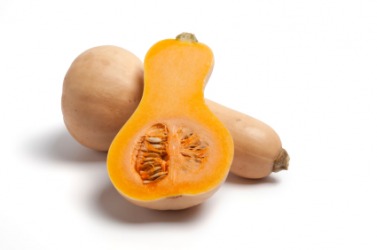
-1 butternut squash (you will not need the whole squash)
- 1 tbsp olive oil
- 1/4 cup finely diced yellow onion
- 2 garlic cloves, finely chopped
-1 cup arborio rice
- 4 1/4 - 4 3/4 cups chicken stock, low sodium, heated
- 1 tsp pepper
- a pinch of salt
- 2 tbsp cup freshly grated parmesan cheese

What to do:
1.  Heat the oven to 375*F.  To prepare the squash, carefully cut in half lengthwise.  Then spoon out the seeds.  Pour enough water into the sided baking pan so the water is ~ 1/4" deep.   Lay one half of the squash on a sided baking pan with the hard skin facing up.  When the oven is ready, put the pan in the oven. Cook until the skin bubbles and starts browning, which should take about 30 - 40 minutes.  Remove and let cool when done.

2. Heat oil in a large tall-sided skillet or risotto pan over medium heat.  Add onion and garlic and saute for ~ 5 minutes; do not color the onions or garlic.  Add rice and stir for ~3 minutes.  Add in 1 cup hot stock and stir often.  Do not boil, but keep at a low simmer.  When the liquid is mostly absorbed into the rice, add 1/2 cup stock.  Continue this process until most of the liquid is gone and you have tasted the rice for doneness (there should be no crunch or hardness).

3. Remove the skin from the squash.  The skin should easily peel off with your hands or using a fork to get between the skin and the squash.  Then mash squash with a fork or puree in a machine.  Add 1 1/2 cups squash puree to the risotto mixture, reduce head to low, and stir in completely.  Add cheese, pepper and salt.  Taste and adjust seasonings if necessary.  Recipe makes 4 - 6 portions.


Nutrition remarks:
Arborio rice is a white, short-grain rice.  It is high in carbohydrates, low in fiber, low in fat, and fairly low in protein.  Unless it is enriched, it does not provide much vitamins or minerals.  Even when it is enriched, the amounts are still pretty low. So by itself, it is not the healthiest food nor is it the most unhealthy food.  When you add high-sodium  stock to it, its a little less healthy because of the large amount of stock you use.  That is why I recommend using low-sodium stock.  When you add in some vegetables, then you are getting more fiber, vitamins, and minerals.  So a big plate of plain risotto is not a nutritious meal, but it can be a component of one.

Tuesday, April 10, 2012

Green Bean Casserole

Green bean casserole has become my favorite food at Thanksgiving dinner and one of my favorite dishes ever.  My family has started serving it with Christmas dinner, Easter dinner, and birthday dinners because there are a couple of us who just love it so much!

Cream of mushroom soup was one of the first soups I learned to make when I started culinary school.  It was delicious!  I was surprised by how little cream we used in the soup.  You actually get the creamy color from the addition of flour early on in the cooking process.  You get the creamy consistency partly from pureeing the food, and partly because of the flour.  The cream is the last thing you add, so the amount can be altered or left out depending on your preference.

My recipe is a little different than the one we made at school only because I have limited supplies and equipment.  So I will tell you what I did, and how it differed from the recipe we learned at school.


Cream of Mushroom Soup

What you'll need:
- 1 small yellow onion, chopped (~2/3 cup)
- 1/2 cup chopped leek
- 2 garlic cloves, chopped
- 2 tbsp olive oil
- 1 (8oz) container white button mushrooms
- 1/2 (8oz) container Shitake mushrooms
- 2 tbsp all-purpose flour
- 2 - 2 1/2 cups beef stock
- 1 tsp dried thyme
- 1 tsp dried parsley
- 1 tsp dried chives
- 1 tsp ground pepper
- 1/2 tsp salt
1/4 cup heavy cream

What to do:
1.  Heat oil in a medium sauce pan over medium heat; add onion, leek, and garlic and stir.  Be careful not to color or burn this mixture.
2.  While the onion mixture is cooking, prepare the mushrooms.  Remove the stems and discard.  Use a damp paper towel to clean the top and bottom of the mushrooms.  Never rinse mushrooms because they will get soggy.  Then chop them up.  When the onions are translucent, add the mushrooms and stir for ~3 minutes.
3.  Add the flour and stir it into the mushrooms mixture completely.  Remove from heat and let cool for ~ 5 minutes.  While this is cool, heat the stock on the stove.  When the mushroom mixture has cooled slightly and the stock is hot, slowly pour the stock into the mushroom pan while stirring continuously.  Add seasonings.
4.  Bring to a boil, then reduce heat to a simmer.  Simmer 15 - 20 minutes.  Remove from heat and let cool slightly.  Add heavy cream and stir.  Taste and adjust seasonings. Use an immersion blender, blender, or Cuisinart  to blend the soup until it is fully pureed. (I do not have any of those in Dubai, so my recipe is more chunky than pureed).  Pass the mixture through a strainer into a casserole dish.


Green Bean Casserole

What you'll need:
- Emily's mushroom soup
-2 (12oz) cans green beans, drained and rinsed (fresh can be used but in Dubai the fresh green beans are terrible!)
-1/2 cup onion slices
- 1/2 cup vegetable oil

What to do:
1.  Make the mushroom soup recipe
2.  Heat the oil in a very small sauce pan so that oil reaches ~ 1/2 inch high on the wall of the pan (use more oil if necessary).  Wait until this oil is very very hot.  Test the oil by adding in 1 slice of onion.  If it does not immediately sizzle, then the oil is not hot enough.
3.  When the oil is hot enough, add in the onion slices and fry until golden brown.  When done, remove from oil and lay on a paper towel.
4.  Mix the green beans with the mushroom soup in the casserole dish.  Top with fried onions.  Recipe makes 5 servings.


How this is different from the recipe in my school book:  1- they used butter instead of olive oil to cook the onion and leek; 2- they also cooked celery with the onion and leek; 3- they did not use garlic; 4- instead of all the spices I listed, they use a 'bouquet garni' which is thyme, bay leaf, pepper, and parsley sprigs wrapped in a leak leaf and soaked in the mixture and removed before pureeing.  Both recipes were delicious and easy to make, so take your pick.


Nutrition remarks:
When making this recipe with canned cream of mushroom soup, the sodium content is much higher as well as the saturated fat content.  Adding the fried onions also does not help.  My recipe, even with the cream, is much lower in saturated fat and sodium compared to the Campbell's recipe.  I didn't bother trying to make a large amount of fried onions because they were not very likely to come out the way they are supposed to.  But the recipe was so delicious without it.  So the recipe I made is fairly healthy, especially when you leave out the cream.  This recipe would also be a good alternative to the Campbells recipe because it is on the healthier side, but not too far from the original product.

Sunday, April 8, 2012

Happy Easter!

Hope everyone is having a wonderful Easter.  Ben and I enjoyed our Easter in Dubai.  We don't have any Easter baskets, so I decided to hide some candy and little presents around the apartment.  So Ben had to hunt for his presents. We went out to the Lime Tree Cafe in Jumeirah.  The Lime Tree Cafe seems to be pretty famous here. I have read about it in all the tourism guides and multiple websites.  The food was wonderful!  They mainly have egg dishes, sandwiches, and salads.  They are especially famous for their carrot cake.  So after enjoying eggs florentine and a steak and gorgonzola sandwich, we took a piece of carrot cake home to have for dessert.

Just for fun, we colored some eggs.  We are not the most artistic people, apparently.


Then I made some varieties of egg salad with homemade mayonnaise.
Homemade mayonnaise

Plain egg salad with paprika, egg salad with sweet pickles, egg salad with yogurt and dill


For dinner I made butternut squash risotto, green bean casserole with homemade cream of mushroom soup, and Australian tenderloin.  Ben said it was the best meal we have had here!

Green bean  casserole

Easter dinner

I will post the recipes at another time, but for now it is time to go to bed.  Happy Easter everybody!

Sunday, April 1, 2012

Lean red meat

How do you know if the meat is lean or not?  Don't bother memorizing the different cuts, just use your eyes and knowledge of colors and portions.

First ask, do I see red?  If not, then you are not looking at a red meat, so find something else.

Do I see white/yellow/creamy white shades in or around the meat?  These parts are the fat, saturated fat to be specific.  Fat around the edge can be trimmed off, but the marbling (inside) cannot.

Do I see more white/yellow/creamy white that I do red?  If yes- it is very fatty.  Bacon and pepperoni certainly fit under this category.
Ribs


Some pretty fatty bacon

Do I see mostly red and very little fat?  If yes- then you have found your lean meat.

Flank steak

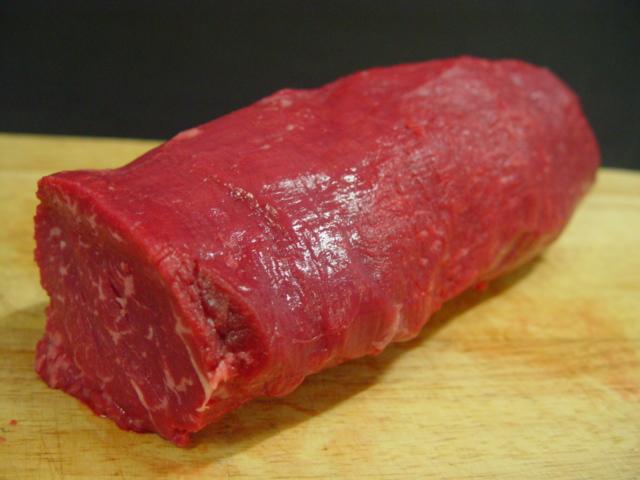
Beef tenderloin

The beef here is from Australia and it always looks great.  I usually don't eat much red meat, but I have been eating my share of sirloin and tenderloin here in Dubai.  Here are two very easy dishes I made:

Steak Stir Fry


See how lean and red the sirloin is


What you'll need:
- 2 (4oz) beef sirloin
- 1 green bell pepper, sliced
- 1 red bell pepper, sliced
- 1 cup cabbage cut into strips
- 1/2 cup baby corn, chopped
- 1/4 cup chopped green onion
- 3/4 cup cooked rice
- salt and pepper
- Asian seasoning or sauce

What to do:
- Heat oil in a large skillet.  Add veggies and about 1 tbsp sauce and stir.  When cooked, remove food from pan, and return pan to the stove.
- Slice the meat very thin- about 1/4 inch.  The pan should be very hot before adding the meat. When you add the meat, stir constantly and quickly to make sure all sides are browned.  Once all sides are browned, the meat is done.  Add 1 tbsp of sauce to the meat and serve with veggies and rice.  Recipe serves 2.

I used a pre-made sauce instead of making something because I don't want to buy a bunch of ingredients that I will have to use up in only 2 months.  So the ingredients in the sauce I used are: water, sugar, soy sauce, brown sugar, sesame oil, salt, sesame seeds, garlic, chili, and ginger.


Steak and Potatoes


What you'll need:
- 2 (4oz) beef sirloin
- 6 to 8 new potatoes, quartered
- 10oz green beans, ends chopped off
- 2 tbsp olive oil, divided
- 3 cloves of garlic, finely chopped, divided

For the marinade:
- 2 tbsp balsamic vinegar
- 2 tbsp olive oil
- pinch of salt and pepper
- 1 clove garlic, finely chopped or pressed

What to do:
- Marinate steak for 20 minutes
- Heat a medium skillet with 1 tbsp olive oil; add the potatoes, 2 chopped cloves of garlic, salt and pepper and stir.
- In a separate medium skillet heat 1 tbsp olive oil; add green beans, 1 chopped garlic clove, salt and pepper, and stir.  When green beans are almost done, add potatoes.
- Reheat the empty skillet used for the potatoes.  When hot, add the steak.  Cook 3 to 4 minutes on each side depending on how thick the steak is and how you like your steak cooked.  Recipe serves 2.

Saturday, March 31, 2012

Fish. Super easy. Super healthy.

The argument that 'I just don't have time to make something healthy for dinner' will never cease to exist, unfortunately.  I will continue to try to prove to the world how lame that excuse is.  There are so many dishes that take minimal time and are nutritious and delicious.

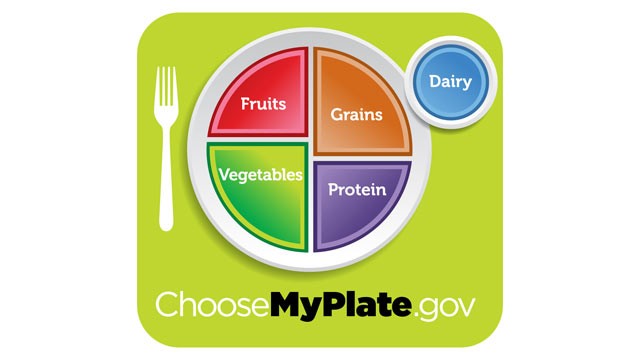
When planning out a healthy meal, first plan for what needs to be on the plate.  There should be some sort of low-fat protein source like chicken, fish, or lean meat.  There should definitely be lots of veggies.  There should be a fruit.  You may or may not have a starch, but try to make it whole grain most of the time.  You may also have some dairy, but try to make it low-fat most of the time.  This general idea has formed the 'new food pyramid' which is now a picture of a plate.


This plate helps you form a healthy meal, but now you have to think about what is easy and takes little time to prepare.  Let's start with the protein foods.  Do you know how long it takes to steam shrimp?  It will depend on the size, but it is likely going to be less than 3 minutes.  If you buy them deveined and without the tail- then there is no prep time, only cooking time.  Really skinny fish might take about 5 minutes to be pan-fried on the stove.  Thick fish like salmon will take closer to 10 minutes.  Thin chicken (bought or prepared that way) will take around 8 - 10 minutes; thicker chicken around 12 - 15 minutes.  Depending on how you like your red meat cooked, it may take 8 - 12 minute for cuts like tenderloin; it will take longer for larger pieces like a flank steak.  What will take a long time to cook?  A whole chicken; large cuts of beef that are made for roasting;  tough cuts of beef that are made for stewing.  There is little prep work with protein foods unless you need to cut it up a certain way.

  
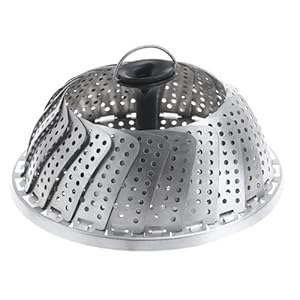
Veggie steamer

Ok let's move on to the veggies.  Salads generally have only prep time and no cooking time.  Depending on the salad ingredients, it may take a while to do all the chopping.  Still,  it is likely you will not spend 20+ minutes cutting up veggies.  Green beans or thin asparagus can be cooked in 10 minutes: 5 minutes steaming, 5 minutes sautéed in olive oil.  Zucchini and squash may take a little longer depending on how you cut them up and how you cook them.  Onions can take only 3 minutes if you are just trying to cook them until they are translucent.  But if you want caramelized onions,expect to spend a good 20 - 25 minutes stirring.  Most things you make in the oven, such as roasted cauliflower, is going to take longer than something cooked on the stove top.  Artichokes, no matter how you cook them, will take a while because there is quite a bit of prep work and very little edible portion inside the artichoke.

Now let's talk about fruit.  There are quite a few bite-sized fruits that you can just set on the table and pick at throughout the meal: berries, grapes, cherries.  This means that washing in the only preparation step.  There are some fruits you can eat whole, but would most likely cut up for the dinner table: apple, pear, peach slices. So you would need to spend time washing and cutting. Then there are foods that you cannot eat the outside: pineapple, cantaloupe, watermelon, mango.  Some of these you may just cut up and serve with the rind still on it; others you may need to separate the fruit from the outside layer.  In the case of mangos, you have to separate the fruit from the outside skin and the inside pit.  Mangos can take quite a bit of effort to prepare. No matter what fruit you use, you are likely to eat it raw, so there is no cooking time.

Grains are one food that may take a while to prepare and/or cook.  If you are making pasta, you have to wait a while for the water to boil (unless you have Justin and Julie's amazing stove), then wait for the pasta to cook.  Same deal with the rice.  If you are making potatoes- you may need to peel or cut, and you absolutely have to wait for them to cook.  This may take 20 - 25 minutes to cook new (small) potatoes on the skillet, or 30 - 45 minutes in the oven;  it would take longer for a larger potato to bake in the oven.  The time for corn depends on if you are boiling or grilling.  Peas... well I hate peas and we're all older than 5 so let's just move passed that food.  Winter squashes are going to take some time to cook because they have such a thick outside layer.

So here are some easy combinations:
-Heat up the skillet and heat a saucepan filled with a little water.  Start cooking a chicken breast; then chop some zucchini; steam zucchini for 5 minutes; cut apple and pear slices while food is cooking; flip chicken; saute zucchini in olive oil for 5 - 8 minutes. Total time: ~17 - 20 minutes

-Start heating water for rice; chop red and green bell peppers, then saute; heat a skillet; add rice to hot water; cook steak on skillet; chop pineapple (take off the skin).  Total time: ~25 - 28 minutes

-Heat water in saucepan with a veggie steamer inside; heat a skillet; add asparagus to saucepan; add fish to skillet; remove asparagus and saute in a skillet; flip fish; wash grapes. Total time: ~ 12 - 14 minutes

The last one is similar to a meal I made recently.  Earlier that day we had made and eaten a lot of fried food at school, so I wanted to make something healthy.  I was also tired from a long day, so I wanted to make something fast.  So here is what I made:

Pan-fried salmon with asparagus, and a side of chopped mango
What you'll need:
- 2 tbsp olive oil, divided
- 1 salmon filet
- 4 oz thin asparagus
- salt and pepper
- 1 lemon slice

What to do:
- Heat a small sauce pan fill with ~ 1/2 inch of water; place a veggie steamer inside.  When the water comes to a low boil, add in asparagus and cover.
- Heat a small saute pan over medium-high heat and add 1 tbsp olive oil.  Sprinkle a pinch of salt a pepper on the top of the salmon.  When pan is hot, add salmon with the top facing down on the pan. After about 3 to 4 minutes, flip.  If the bottom of the salmon does not have the skin still attached, turn the heat down to medium-low.
- Take the asparagus and the steamer out of the pan, and empty all the water. Heat 1 tbsp olive oil, and add asparagus back in. Stir frequently.  Sprinkle a pinch of salt and pepper and stir some more.
- The salmon should be cooked about 4 to 5 minutes on the bottom side. Fish is done when it flakes easily when using a fork.  The asparagus should be tender, but still have a little bit of crunch.
-  After plating the food, squeeze a little bit of lemon juice over the salmon and asparagus.  Serve with any kind of fruit.

You may wonder how this will take since there is very little seasoning added to the food.  Salmon and asparagus are both very strongly flavored foods.  If you like the flavor of these foods, you don't need a seasoning to cover up those flavors.  If there was one seasoning I would add, it would be dill.  Dill goes very well with both.  However, Dubai does not have any dill in any grocery store I have been to. but I think this meal without the dill was perfect and delicious.

Tuesday, March 27, 2012

What I have been making at school so far

We are getting to the point where we are in the kitchen every day; sometimes twice a day.  We started with stocks, then sauces, then soups.  Next we starting making salads and sandwiches.  Now we are finishing up appetizers and just starting egg dishes.

This is our first day for sauces.  We made hollandaise, and the derivative bearnaise; mayonnaise and the derivatives cocktail sauce and tartar sauce; espagnol and the derivative demi glaze.

More sauces

We moved on to soups.  We have cold potato and leak soup (left) and Gazpacho

Scotch Broth and Minestrone

Pumpkin puree soup and lentil puree soup

Nicoise salad and Greek salad

Waldorf salad

Then we moved on to sandwiches.  Club sandwich in the front, steak sandwich in the back right.

"submarine" sandwich.  It was pretty close to an Italian sub, considering there is no pork allowed at the school

Appetizers, and so many of them.  There is tuna mouse, cucumber, smoked salmon, brie cheese and grapes

Spanakopita has a spinach and feta filling wrapped in Filo pastry.  The spring rolls are filled with veggies and deep-fried.  The Lamb samosa was also deep fried.

Vietnamese spring rolls made with the most delicate edible paper.  Tortilla rolls made with bells peppers and little too much green chillies.  Crepe rolls made with a spinach and cream cheese mixture.  Crepes are not super easy to make fyi.

On the left is a stuffed portobello mushroom. In the back is vol au vent (pastry stuffed with a really yummy chicken cream sauce).  On the right is tarte tartin.  Basically you make ratatouille, then put it in a small pie dish, then put pastry dough on top, bake, and flip it over before serving it.

Souffle

The left is broccoli, onion, and cheese quiche.  The right is spinach, onion, and goat cheese quiche.


hungry yet?

Monday, March 26, 2012

Hollandaise Sauce

I have now had eggs benedict 3 times in my life.  Once was made (I believe) with home-made hollandaise sauce, and another with a store bought powder mixture.  And once was a interesting twist on the original that I made here at our apartment  in Dubai.

At school we of course are required to learn how to make hollandaise sauce.  It is a tricky, and very tiring process.  It is easy to mess up.  But if you know the steps, and have good arm muscles, you can absolutely make it at home.  It's a weekend food; definitely not something you try to make before work on Monday morning.

Hollandaise sauce is also not something to eat on a daily basis for health reasons.  The main component of the sauce is butter, which is made of saturated fats.  So it's really not the healthiest food to slather all over your eggs or asparagus.  At school, we make it the official way.  At my apartment, I do not keep butter.  I only keep buttery spreads because they are much lower in saturated fat.  So this was a bit of an experiment to see if it would work.  So I'll give you the official step by step method, and then let you know what I did differently.  This is more than a recipe because it is so detailed.  Just reading and using a recipe for hollandaise leaves room for so much error!

First, take about 10 tablespoons of butter and melt over the stove on medium-low heat.  You want to make sure it doesn't boil, but you also want to allow the impurities (white foamy stuff is the technical term) to rise to the top.  When that happens, you can take it off heat.  Then take off all the foamy white stuff using a spoon.  This is known as clarifying the butter.  What you are left with should be at least 80ml (yes I only really know the metric amounts since that is what we do in school) of clarified butter. Keep it off hot heat but keep it warm.

Next, you need to pour about 2 tbsp white vinegar into a small saute pan.  Add in 3 whole peppercorns, 1-2 bay leaves, a pinch of salt, and a pinch of cayenne to the vinegar.  Put the saute pan on the stove over medium-high heat and let the vinegar reduce by half.  Take the vinegar off the heat and add in about 1/2 to 3/4 tbsp of cold water (to stop the reduction).

Then,  separate one egg so the yolk is in one bowl and discard the egg white (or use it for something else). Strain the vinegar mixture into the egg yolk.

Heat a medium sauce pan filled about half way with water and bring to a low simmer.  Reduce heat slightly.  Now comes the painful part.  Hold the bowl of egg and vinegar over the sauce pan without letting the bowl touch the water and while letting steam escape from the pan.  With your other hand, whisk whisk whisk!!!!!!  Use all your strength and then some to whisk the egg.  And try to ignore the logical thought of taking your other hand away from the heat.

You must whisk until the egg reaches a 'sabayon.'  This just means the egg mixture should thicken a little before you can stop whisking and take it off the heat.  Once you do that, then it is time for more whisking!  It helps if you have another person around for this next step.  You will need to slowly pour in the clarified butter with one hand while whisking with the other, and somehow manage to keep your bowl stable.  So you can hold the bowl and whisk while the other person slowly pours in the butter.   It is also nice to have someone else there so you can take turns whisking after your muscles get tired.  If you are super talented or feeling really independent- try it by yourself.  Whisk in the clarified butter until the sauce has a creamy thickness.  You should be able to pour it from a spoon, but it should definitely stick to the back of the spoon.  Hollandaise is for spreading and pouring, so it can be thicker than most sauces.  When it is done, add a teaspoon of lemon juice.  And you're done!!  Put over eggs benedict or asparagus.

After typing this up, it doesn't really sound like the most ideal thing to try at home.  But if you like a challenge- here it is!

So the healthier (and low-on-supplies-method) used buttery spread instead of  butter; thyme instead of bay leaf; apple cider vinegar instead of white vinegar; no cayenne pepper.  I tried melting the butter in the microwave, but it never got liquidy.  So it did not require much butter to thicken my sabayon.  So it turned out fairly healthy considering my recipe created multiple portions.

For the eggs benedict:
toast half of an English muffin, poach an egg, and crisp a piece of canadian bacon in a saute pan.  Then top it with the hollandaise


To store or not to store?  It is recommended not to keep hollandaise for more than 2 hours.  There are a couple reasons.  One- reheating too fast or at too high a heat will cook the eggs too much and they were harden.  Another, involves food safety.  Did we even cook the egg?  So the reason hollandaise works (meaning you are not scrambling eggs in a Bain marie) is because of the vinegar.  Vinegar reduces the temperature at which eggs cook.  So you can bring eggs to about 140*F or higher without cooking them.  But you have reached a high enough temperature to kill most of the bacteria.   If I had a thermometer here in Dubai, I would have monitored the temperature of the sabayon.  But if you decide to make it- you can definitely do that.  The more vinegar you add, the higher the cooking temperature of eggs (but also the more you have to whisk to reach a sabayon).  For reheating- make sure the temperature is fairly low and you heat it up slowly.  Also, watch the temperature and make sure it does not go too high but does not stay too low.  It is best to reach 170*F for reheating food, though this may be slightly too high for an egg product.

Tuesday, March 13, 2012

Recipe Contest

Hello all!  I'd like to ask for your help in a recipe competition I entered.  For the contest I have to create a dish using Sadia chicken.  Then, submit the recipe and a picture.  This is an online contest- so no one will be tasting my recipe in front of me.  Here is the website for the contest if you are interested: http://sadia-life.com/challenge/english/

I am quite sure the recipe looks good on paper.  Now I need to make sure the food looks good in a picture.  I have made the food and tested it and took a bazillion pictures!  I need help deciding what is the best picture!  So here are the top pictures.  Just let me know which one you like best! Thanks!  Oh did I mention the top prize is a free trip to Paris!?  So please, be critical and do not say 'they all look great' or 'they all look the same.' =)   Thanks everyone!! I appreciate your help!!  Also,  I will later post the recipe to go with it.

Picture #1: No mushrooms on the plate

Picture #2: With mushrooms on the plate

Picture #3: More focus on the chicken

Picture #4: With parmesan cheese sprinkled on top


Keep in mind when voting: the competition is for chicken (not risotto), so whatever angle and lighting make the chicken look good and the picture great as a whole would be the best.  I really appreciate your help!  Please vote by tomorrow Wed March 14.  Thanks!

Sunday, March 11, 2012

We moved!


Yay! Finally! We moved to the Sky View Tower in the Marina.  It's just a couple miles away from where we used to live, but it is so much better.  There is so much to do here- restaurants, bars, shops, and the beach!  Our apartment is also much bigger! We have a bigger TV room with a bigger TV.  The kitchen has a full fridge, 4 burner cooktop, an oven, so much more cabinet space, and a breakfast counter.  We also have a clothes washer AND dryer.  We have a balcony again, but this time we can use it and it has a great view up from the 15th floor!  We have wireless internet here so we don't have to split up time for who can use the internet (I always lost anyway since Ben was doing it for his job). So here are some nighttime pictures of our new place.  I'll post some pictures when the sun in still up on another day.

The entrance way.  There is a half-bath on the right on the way to the front door.

The living room.  Much bigger and a much better view.  I love that the kitchen opens up to it.

More closet space!

I can't even express how happy I am to have a bigger and better and more equipped kitchen!

Nice bathroom

Is is bigger or smaller that a breadbox?


Our balcony overlooks part of the marina.  We can see some pretty nice yachts from up here!


Wednesday, March 7, 2012

Culinary school so far

Being a culinary student has been interesting so far.  There are currently 14 of us, though it is debatable whether one person will return.  For the most part, we all get along pretty well.  Most of us are pretty close in age which is cool.  But I would not say we are all similar in our life, school, and culinary experiences.  Some have much more experience cooking a variety of dishes.  Some lack experience in a high-stress work or school environment.


Well the beginning was a bit slow for me as it was mostly material I learned in undergrad.   I think they were going at a slow pace in the beginning to get us acquainted with how they run the school.   Some students are fresh out of high school while others have not been in a classroom for almost 10 years, so not everyone was prepared to jump right into a face-paced learning environment.  They have started picking up the pace recently as we are now in our third week.

We finally got to brand new material for me, which was fun.  I learned all about stocks, sauces, and soups.  We have started making a couple ‘mother sauces’  and soups in the kitchen and will continue to make more.  In a little while we will have a theory test and then we will have a practical test where we will have to cook a sauce or soup and be graded on the consistency, texture, and taste. So far in class I am nailing the taste component!  But the consistency, which is more important, is not quite right.  I am really enjoying what I am learning now.  They may not always be the healthiest recipes, but now I know where these sauces and soups are starting from.

The chefs certainly have a Mr. Martin-way of teaching.  For those of you who do not know Mr. Martin, he was our German class teacher at PVI.  He focused a lot on life lessons, rather than the textbook material.  That is why after 4 years of taking German, I really know very very little; and after two years Ben only knows how to say ‘I go to school on a moped.” So in Dubai, we may go over 3-5 pages of material in an entire day.  But we will hear tons of ‘this one time at the restaurant...’ stories.  Very interesting stories, and often good-to-know info, but it is certainly one reason the pace of the class goes so slow.

I continue to get a lot of nutrition questions being the nutritionist of the class.  Questions range from ‘how many calories do you think this sauce has in it?’ to ‘can you tell me what to eat on a daily basis?’  I even got to do an impromptu nutrition lesson on fiber a couple days ago.  The topic of the class was salads, and people had quite a few health questions.  So the instructor asked me to come to the front of the class and talk about the glycemic index, fiber, and weight loss.  It was funny to see how easy it is for students to ask off-topic questions.  The instructor probably wanted me to talk for no more than 5 minutes, but it ended up being about 8 – 10 minutes because there were so many questions.  It was fun to see so much interest in the health aspect of food!

Soon we will be participating in Meydan, which is a HUGE horseracing event in Dubai for the rich and famous.  Then we will be participating in Taste of Dubai, which will have vendors, tastings, music, and lots of people to talk to in the industry.  Both will be real life experience, but really long hours.  Saturday we will be at Meydan from 10am unti 12am! 14 hours!  So I’m crossing my fingers for a good job position.

Here are some pictures so far:

This is the group at Gulfood event

One of many amazingly creative and artistic dishes at the Gulfood contest

A few of us got to participate in making pastry decorations.  We were supposed to make those flowers seen at the lower right corner of the pictures.  It was really very hard!  Harder than it looked!

Cream Soups
I made the cream of mushroom soup and Chris made the cream of broccoli soup.